






Méditation hebdomadaire 1 : Faire face à la résistance


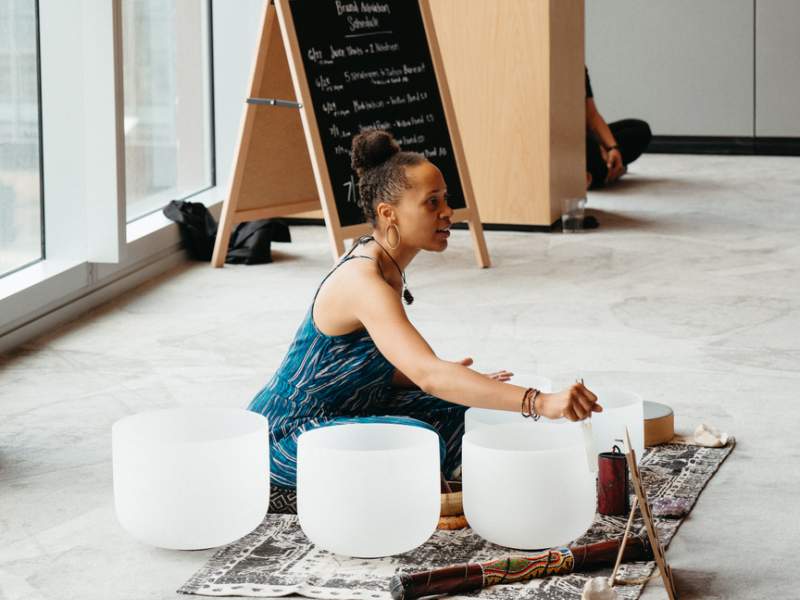
Sortez-moi de là. Je me souviens parfaitement du sentiment de légère panique qui m'a envahi le premier soir de ma formation de professeur de yoga lorsque, sans grande préparation, on nous a demandé de méditer pendant trente minutes. Trente. minutes. Juste comme ça. Mon esprit a commencé à s'emballer. Comment allais-je pouvoir rester assise pendant trente minutes atroces sans bouger ? À quoi vais-je penser ? Comment gérer l'ennui ? Je me serais tortillé pour sortir de là s'il n'y avait pas eu les cinquante autres étudiants assis autour de moi. C'est incroyable ce que l'on peut endurer avec un peu de pression de la part de ses pairs.
Avant de commencer la formation, peu de personnes me connaissant le mieux auraient qualifié mon cerveau de "zen". Je suis arrivée à la formation de professeur avec un corps prêt pour le yoga, mais pas tout à fait avec un esprit prêt pour la tranquillité. J'ai commencé par redouter les séances quotidiennes (deux fois par jour, de 30 à 45 minutes chacune), mais cela s'est vite transformé en intimidation, puis en défi. Je ne savais jamais vraiment comment les choses allaient se passer à chaque fois que je m'asseyais. Mais l'essentiel, c'est que j'ai essayé. Tous les jours, deux fois par jour, pendant un mois, j'ai essayé.
Il s'avère que la méditation est une question de persévérance. Un petit effort s'est transformé en une pratique profondément enrichissante : j'ai appris que les obstacles font partie de l'expérience, qu'il n'y a pas de mauvaise façon de faire, que le calme est le contraire de l'ennui et, all j'ai eu l'impression d'avoir enfin pris le contrôle de mon chaos mental. Cependant, en ce qui concerne les bienfaits de la méditation, vous n'êtes pas obligé de me croire sur parole. Des anciens bouddhistes aux spiritualistes new age, de la psychologie populaire aux sciences de gestion, la méditation et la pleine conscience sont considérées comme la clé du bien-être. Les bienfaits de la méditation ne sont un secret pour personne.
Il existe de nombreuses recherches sur les bienfaits mentaux, émotionnels et même physiques d'une pratique régulière de la méditation. Cependant, c'est l'expérience qui permet de mieux comprendre son impact réel : il se produit quelque chose de mystérieux et de puissant lorsque l'on prend quelques instants pour s'ancrer fermement dans le présent. Alors pourquoi ne pas simplement méditer ? En théorie, la méditation peut sembler assez simple. S'asseoir. Respirer. Être. Dans la pratique, cependant, cela peut être tout sauf simple. Les emplois du temps chargés, l'anxiété et un esprit agité peuvent rendre l'idée de rester assis immobile impossible. Malgré les techniques et les philosophies infinies à notre disposition, j'ai rencontré de nombreux amis qui se sont sentis dépassés par all cela et qui ont eu besoin d'un peu d'aide pour se lancer. Pour commencer toute pratique, il faut d'abord faire quelques petits pas réfléchis, et cette série est conçue pour vous aider à adopter quelques habitudes de méditation régulière.
SEMAINE 1 : VAINCRE LES RÉSISTANCES
Même si je pratique le yoga depuis plus de dix ans, il y a des moments (voire des mois) où mon tapis est le dernier endroit au monde où j'ai envie d'être. Parfois, nous nous surprenons à résister mentalement, physiquement ou émotionnellement à ce qui nous fait le plus de bien. C'est là toute la complexité des pratiques que l'on suit toute sa vie. La force de résistance qui semble venir de l'intérieur est intimidante et il peut être tentant de ne pas l'affronter de front. Mais en réalité, ce n'est pas quelque chose de statique, c'est quelque chose de passager qui s'estompe si on le considère comme surmontable. Nous devons considérer la résistance comme un muscle. Lorsque nous choisissons de ne pas l'affronter, même de manière apparemment insignifiante, elle devient plus forte. La clé est de faire un petit effort, n'importe quel effort, pour la maîtriser. Lorsque je ne me vois pas suivre un cours de yoga complet, je m'engage à faire ne serait-ce que 5 minutes d'étirements profonds. all souvent all se lancer pour affronter sa résistance. L'objectif de méditation de cette semaine est de jouer avec notre pouvoir de surmonter la résistance, de faire travailler notre muscle mental et de voir si vous pouvez créer un peu d'espace pour semer une nouvelle habitude.
Cette semaine, all avez à faire, c'est de trouver cinq minutes par jour pour vous asseoir tranquillement et respirer profondément. Le plus simple est de le faire à la même heure chaque jour. Vous n'avez pas à vous soucier de votre position assise ni de l'endroit où vous vous trouvez. Réglez simplement un minuteur, fermez les yeux et respirez. Si cinq minutes vous semblent impossibles, faites-en trois. Si trois minutes vous semblent trop difficiles, faites-en une. Quel que soit votre choix, engagez-vous à le respecter. Faites-nous savoir comment vous vous en sortez et n'oubliez pas de revenir la semaine prochaine pour découvrir une autre petite étape vers la mise en place d'une excellente pratique de méditation.
Plus d'histoires que nous pensons que vous apprécierez

SOFI TUKKER parle de style, de voyages et de lâcher prise

À l'écoute de la nature : au cœur de la forêt avec Oda